
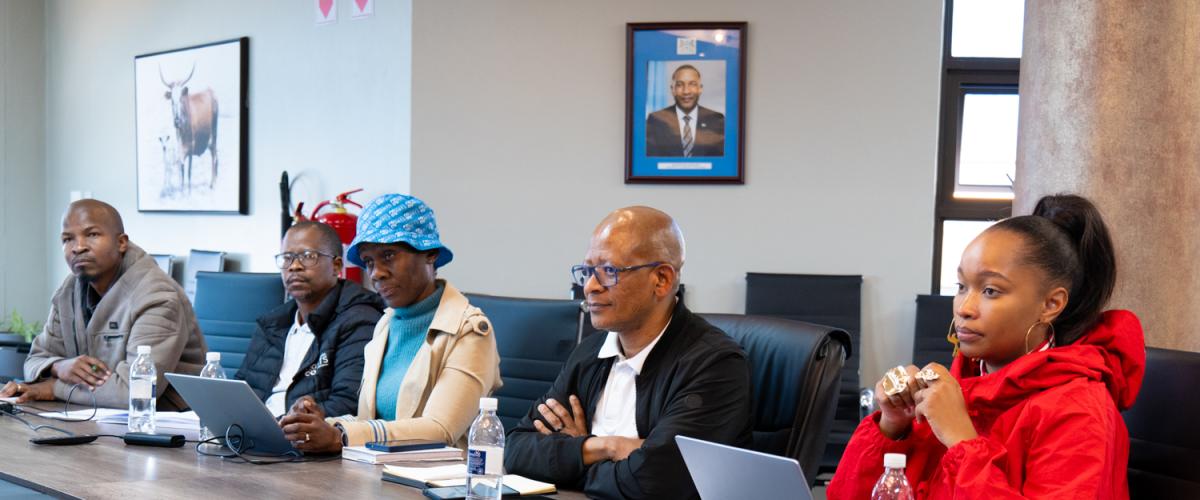
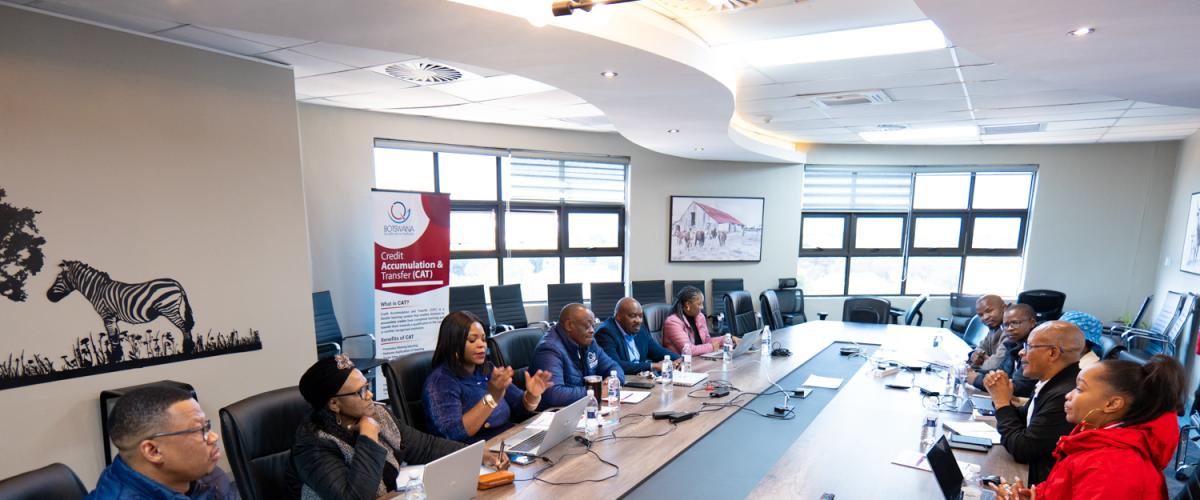
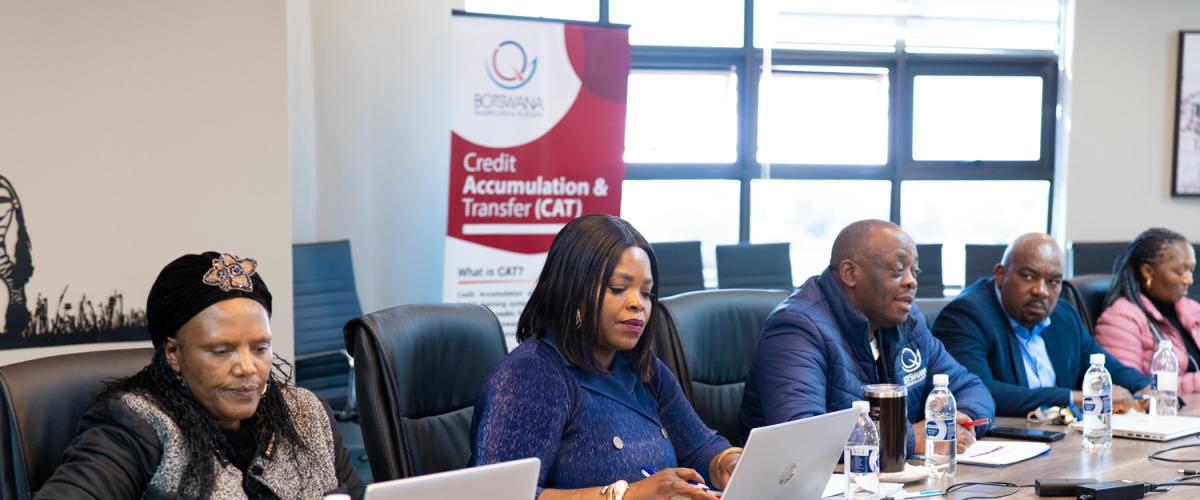
Botswana Qualifications Authority (BQA) and the National Arts Council of Botswana (NACB) have commenced strategic discussions on strengthening Botswana's creative and cultural industries through Recognition of Prior Learning (RPL), qualifications development, and quality assurance.
The meeting held at BQA today provided an opportunity for both institutions to explore areas of collaboration aimed at ensuring that artists and creative practitioners have access to nationally recognised qualifications while maintaining the quality and integrity of Botswana's National Credit and Qualifications Framework (NCQF).
Opening the discussions, the BQA Acting Chief Executive Officer, Mr Ofentse Disang, outlined the Authority's mandate to coordinate and quality assure qualifications across all education and training sub-sectors, i.e. General Education, Higher Education and TVET. He emphasised that the creative industries are an important contributor to Botswana's economic diversification agenda and should be fully integrated into the national qualifications system.
NACB welcomed BQA's mandate and acknowledged the opportunities it presents for the Arts sector. The Council noted that many artists have acquired their skills through years of practice and experience rather than formal education and expressed interest in how Recognition of Prior Learning (RPL) could provide formal recognition of those competencies.
During the engagement, BQA provided an overview of the RPL framework, explaining how experienced practitioners may be assessed against nationally recognised occupational and qualification standards. Successful candidates may receive credit for competencies already acquired, reducing unnecessary duplication of learning while maintaining national quality standards.
The discussions also highlighted the important role NACB could play in supporting qualifications development by providing sector expertise, identifying industry competencies, and contributing to the development and review of qualifications that reflect the needs of Botswana's creative industries.
Both organisations also discussed practical steps towards future implementation, including identifying institutions that could participate in RPL, mobilising industry experts, and exploring institutional arrangements to support the creative sector.
As part of the way forward, BQA and NACB agreed to develop a Memorandum of Understanding (MoU) and an implementation matrix to guide future collaboration on qualifications development, Recognition of Prior Learning, stakeholder engagement, and quality assurance.
The meeting reaffirmed the shared commitment of both institutions to supporting the growth and professionalisation of Botswana's creative industries through nationally recognised qualifications and lifelong learning opportunities.