
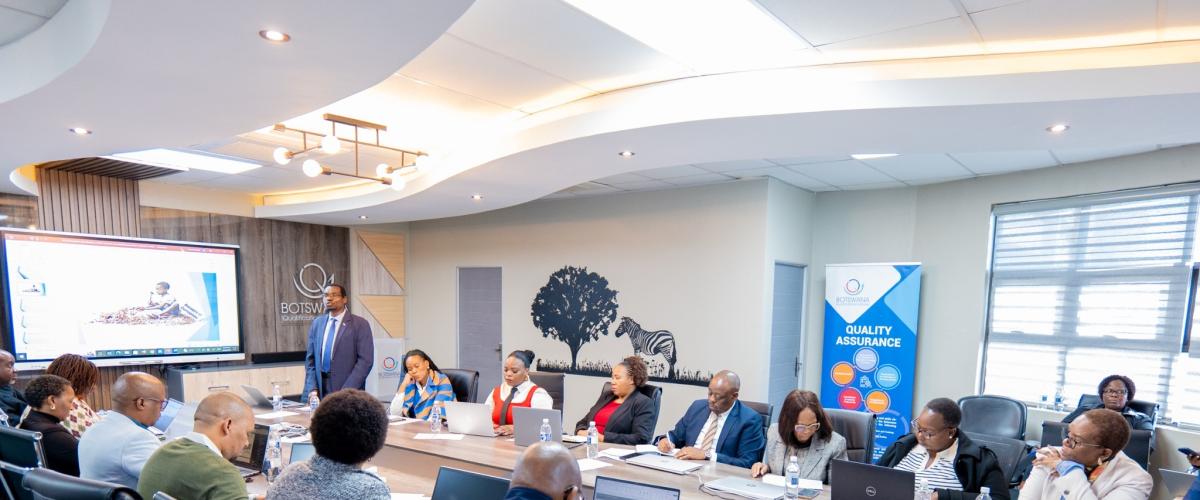
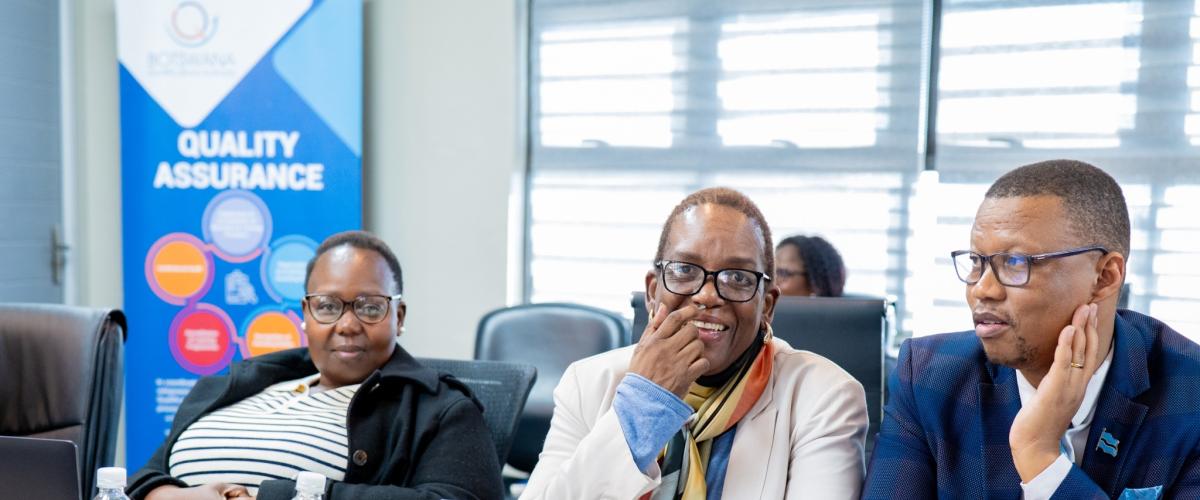
Botswana Qualifications Authority management today participated in a sensitisation engagement led by the Anti-Corruption Unit (ACU) under the Ministry of Higher Education, aimed at strengthening awareness on corruption prevention, ethical leadership and accountability within the organisation and the higher education sector.
The engagement formed part of broader national efforts by the Ministry of Higher Education, and the Botswana government to reinforce integrity, transparency and good governance across public institutions. It provided a platform for open dialogue on corruption risks within the workplace and underscored the importance of effective prevention, detection and reporting mechanisms in safeguarding institutional integrity and public trust.
Speaking during the engagement, Acting Chief Executive Officer of BQA, Mr. Ofentse Disang, acknowledged that the Authority’s mandate remains susceptible to corruption risks in varying forms due to its regulatory and quality assurance responsibilities. He emphasised the importance of maintaining high ethical standards, strengthening internal controls and promoting transparency in all organisational processes as key safeguards for institutional credibility.
Mr. Disang further stressed that embedding a culture of integrity is essential for ensuring that BQA continues to execute its mandate effectively and in line with public expectations. He called on staff and management to remain vigilant and committed to upholding ethical conduct in all operations.
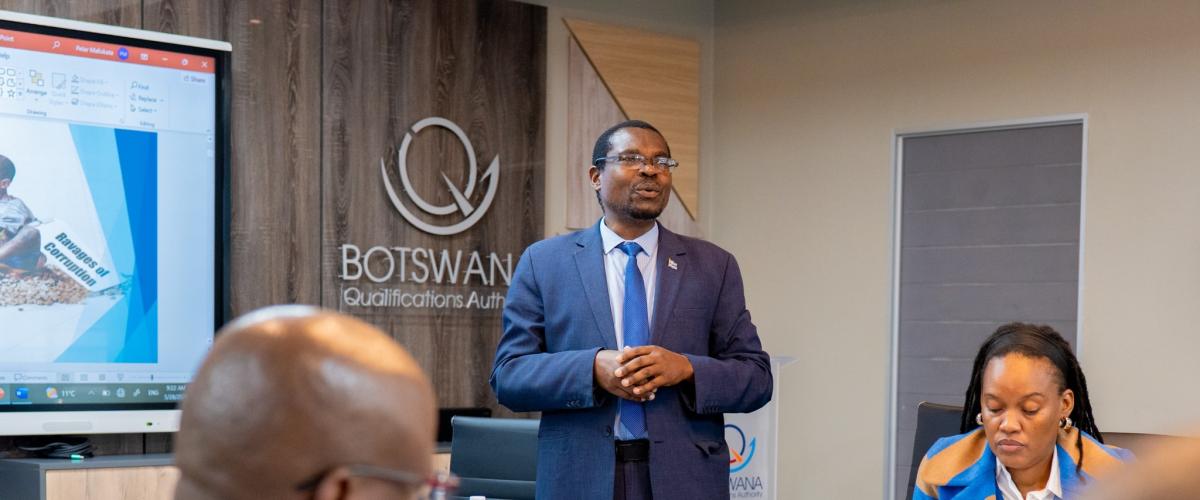
The session featured a presentation by Mr. Peter Mafokate, Deputy Project Manager, Anti Corruption Unit (ACU), in the Ministry of Higher Education who shared insights on corruption prevention, ethical conduct and the importance of accountability within both the workplace and the public service.
Mr. Mafokate outlined the role of the Directorate on Corruption and Economic Crime (DCEC) since its establishment in 1994, noting its continued contribution to corruption prevention, public education and investigations as part of national anti-corruption efforts.
He further explained that in 2010, Government, through the DCEC in collaboration with the former Directorate of Public Service Management (DPSM), established Anti-Corruption Units within ministries to strengthen internal corruption prevention mechanisms. He noted that the Ministry of Higher Education has since fully operationalised its ACU, reinforcing efforts to institutionalise integrity and ethical conduct within the sector.
Mr. Mafokate also noted that the sensitisation programme forms part of a broader outreach initiative by the ACU aimed at strengthening anti-corruption awareness across ministries, parastatals and State-Owned Enterprises (SOEs). He highlighted Government’s continued commitment towards adopting a strong anti-corruption posture and ensuring that public institutions uphold accountability and integrity.
The engagement also included deliberations on the Anti-Corruption Policy, which serves as a strategic guide for all Ministry employees. The policy promotes a culture of zero tolerance towards corruption and empowers staff to prevent and report unethical practices. It further advocates for whistle-blowing and provides clear procedures for identifying, reporting and responding to corruption risks within the workplace.
Mr. Mafokate emphasised that the Ministry has adopted a zero-tolerance approach towards corruption, positioning the fight against corruption as a strategic priority in advancing a transformative higher education environment. He noted that achieving this vision requires all stakeholders to uphold the highest standards of integrity, professionalism and ethical conduct.
The engagement reaffirmed the commitment of both the Ministry of Higher Education and BQA to strengthening institutional accountability, promoting ethical leadership and fostering a corruption-free environment within the higher education sector.
In closing, the Director of Human Resources at BQA, Mr. Thabo Mmolai, thanked the Ministry for the engagement and reflected on the impact of corruption in the workplace and in government more broadly. He underscored the importance of ethical conduct, professionalism and integrity in all workplace practices. He further highlighted that BQA is making significant strides in strengthening alignment with governance expectations, noting that through the Risk and Compliance Division, a number of policies have been developed to provide clear operational and ethical guidance for staff.
BQA Management Sensitised on Corruption Prevention and Ethical Leadership by Ministry Anti-Corruption Unit
Botswana Qualifications Authority today hosted a sensitisation engagement led by the Anti-Corruption Unit (ACU) under the Ministry of Higher Education, aimed at strengthening awareness on corruption prevention, ethical leadership and accountability within public institutions and the higher education sector.
The engagement provided a platform for open dialogue on corruption risks in the workplace and reinforced the importance of prevention, detection and reporting mechanisms in safeguarding institutional integrity and public trust.
The session featured a presentation by Mr. Peter Mafokate, who shared insights on corruption prevention, ethical conduct and the importance of accountability within both the workplace and the public service.
Speaking during the engagement, Acting Chief Executive Officer of BQA, Mr. Ofentse Disang, emphasised that BQA’s regulatory mandate requires continuous vigilance, strong internal controls and a sustained culture of integrity to mitigate corruption risks and protect institutional credibility.
The engagement reaffirmed a shared commitment by the Ministry and BQA to a zero-tolerance approach to corruption and to strengthening governance systems across public institutions.
#Integrity #Accountability #GoodGovernance #AntiCorruption #BQA #HigherEducation